Most brands blend their coffee to taste the same all year. We do the opposite.
Walk into any supermarket and pick up a bag of coffee. Buy the same bag six months later, and it will taste identical. That's not an accident — it's engineering. Large roasters blend beans from multiple origins and harvests specifically so that nothing ever changes.
Consistency is a reasonable goal. But something real gets blended away in the process: the fact that coffee is an agricultural product, grown on actual hillsides, in actual weather, by actual people. A crop, not a formula.
At Dream Hill, we decided to let the seasons show.
One hill, four moods
All our coffee comes from the same place — the hills of Koraput, 3,000 feet up in the Eastern Ghats of Odisha. Same soil, same altitude, same farms. What changes is everything else: the rain, the light, the temperature during ripening, and how we process each harvest.
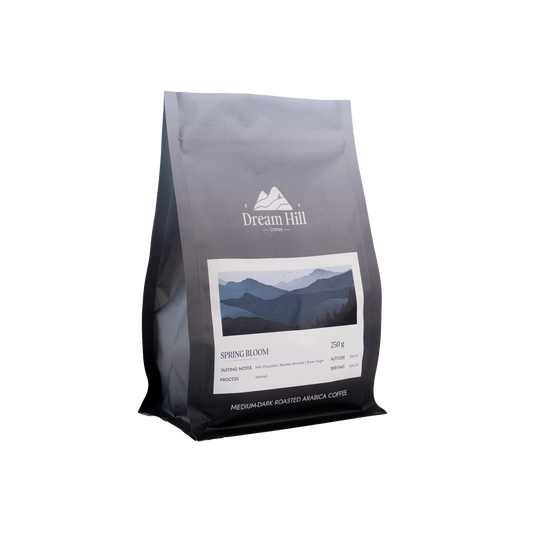
Spring Bloom arrives when the coffee flowers have just given way to early cherries. It's our brightest cup — light-bodied, citrusy, almost tea-like if you brew it gently.
Summer Breeze comes in two expressions. The Washed carries jasmine and orange blossom with a clean finish; the Natural — dried inside its fruit under the summer sun — turns sweeter and heavier, closer to ripe fruit than flowers.
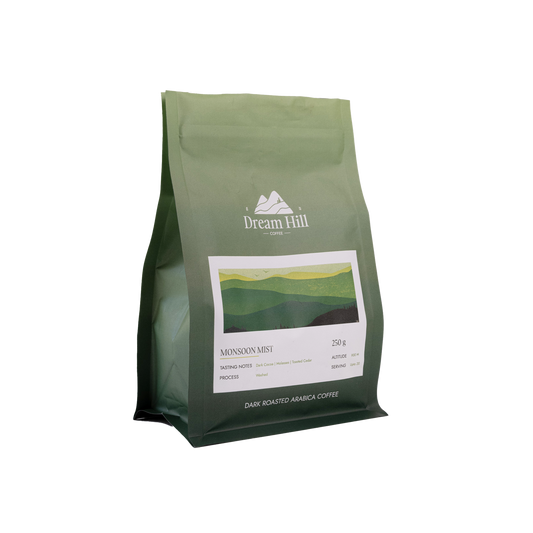
Monsoon Mist is what happens when the rains arrive. Processing slows, moisture lingers, and the cup turns deep, round, and mellow — the coffee equivalent of the fog that sits on the plantation every July morning.
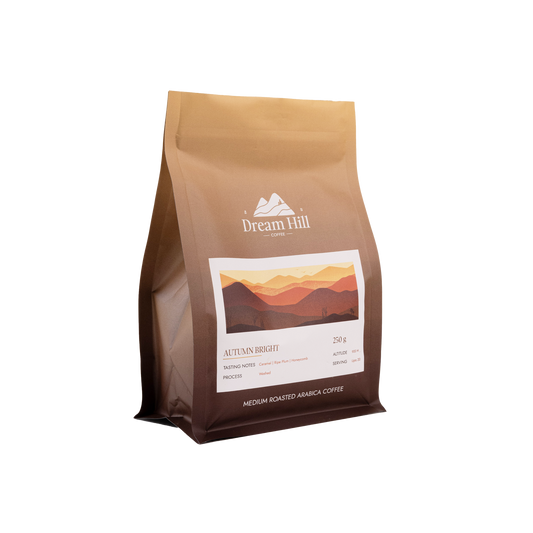
Autumn Bright closes the year with the fullest harvest: balanced, chocolatey, with a warmth of spice. If you want one coffee to convert a sceptic, it's this one.
Why this is harder (and why we do it anyway)
Seasonal roasting means we can't hide behind a blend. Every lot has to stand on its own, which means every harvest gets tasted, sorted, and roasted to a profile developed for that season alone — not recycled from the last one.
It also means things sell out. When Summer Breeze is gone, it's gone until next summer. We know that's inconvenient. We'd argue it's also honest: the hills only make so much of each season, and pretending otherwise would mean quietly padding the bag with someone else's beans.
What this means for you
Two things.
First — check the season before you order, and drink the coffee reasonably fresh. It was roasted to taste like a particular stretch of months in Koraput, and it does that best within weeks of roasting, not years.
Second — if you find a season you love, notice it. Some people are Monsoon Mist people. Some swear by the Summer Natural and wait for it the way you'd wait for mangoes. There's no correct answer. There's just the hill, doing what it does four times a year, and us getting it to your kitchen while it still tastes like the weather it grew in.
The current season's roast is on the shop now. Next season, it won't be.