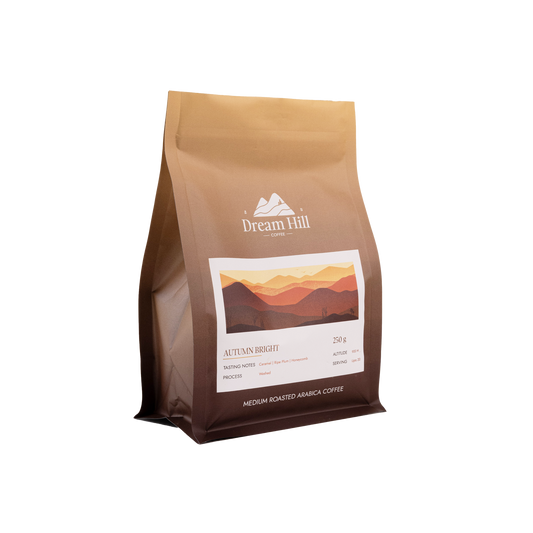
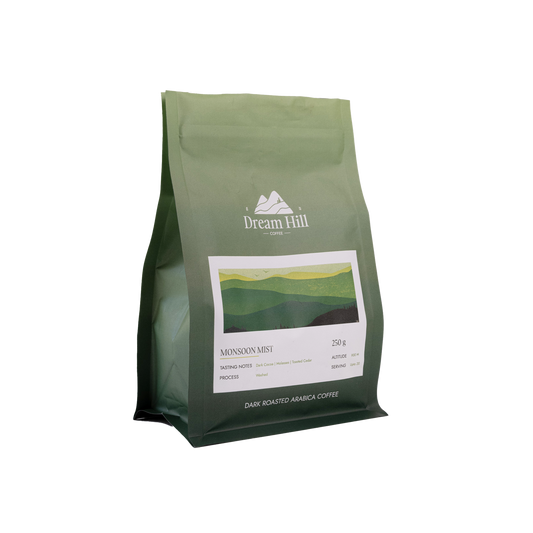
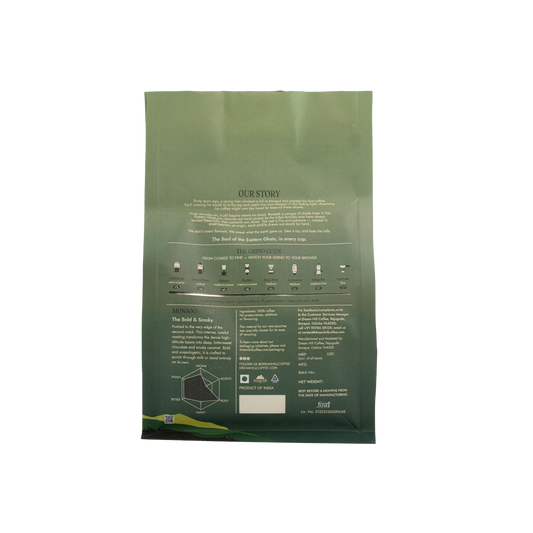
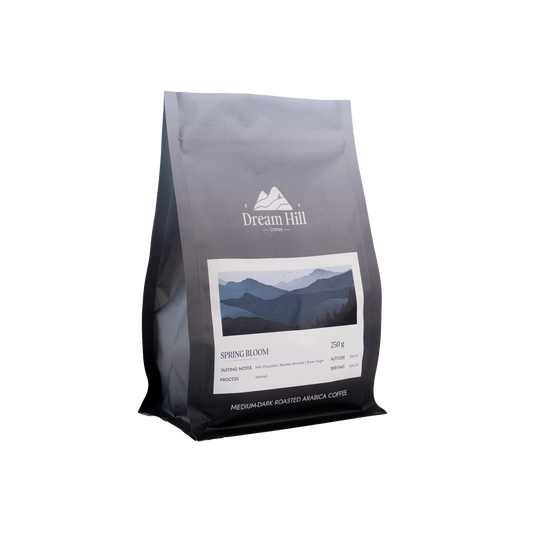
India's best-known coffees come from the south. Ours comes from a valley most coffee drinkers have never heard of — and that's exactly the story.
Ask an Indian coffee drinker where coffee grows, and you'll hear Coorg, Chikmagalur, maybe Wayanad. Almost nobody says Odisha. Yet tucked into the southern corner of the state, high in the Eastern Ghats, the Koraput valley has been quietly growing Arabica for decades — at altitudes and in conditions that rival far more famous origins.
This is where every bag of Dream Hill begins.
The place
Koraput sits around 3,000 feet above sea level, in hill country that catches the monsoon early and holds its mist late into the morning. The elevation slows the ripening of the coffee cherry, and slow ripening is the whole secret of good Arabica — the longer a cherry takes to mature, the more sugar and complexity it develops. What takes weeks in the plains takes months in these hills.
The coffee here grows in shade, under a canopy of native trees, on small plots rather than industrial estates. It's farming that looks closer to forestry than agriculture — which is part of why the region's coffee has stayed under the radar. Small plots don't fill shipping containers. They fill bags.
The people
Coffee in Koraput is inseparable from the Adivasi communities who farm these hills. For the region's tribal smallholders, coffee has become a crop that works with the land they've cultivated for generations — grown under existing tree cover, harvested by hand, picked selectively at peak ripeness because small plots make careful picking possible.
That hand-picking matters more than any machine ever could. A mechanical harvester strips a branch of everything — ripe, unripe, overripe. A farmer picking by hand takes only the cherries that are ready and comes back next week for the rest. When you taste the clarity in a cup of Dream Hill, that's what you're tasting: someone's judgment, exercised one cherry at a time.
The plantation
Thirty years ago, long before "single origin" was a phrase anyone printed on a bag, Sushant Panda planted coffee on a hillside in Koraput. In the evenings, he would sit and watch his plantation — every row of it, running down the slope toward the valley.
His son grew up around that habit: the beans, the hand grinder, the evening view. Dream Hill exists to share what that hillside makes — and its name comes from exactly where you'd guess.
Today the coffee in your bag comes from those hills: the family plantation and the small tribal farms around it, harvested season by season, roasted in small batches, and sent out while it's still fresh enough to taste like the place it left.
Why "under the radar" is an advantage
Famous origins carry famous expectations — and famous price premiums that often reward the name more than the cup. Koraput carries neither. What it offers instead is coffee from high, misted, shade-grown hills, picked by hand, in quantities small enough that every lot gets real attention.
We think that's a better deal. And we suspect that in a few years, when Indian coffee's map gets redrawn — as it inevitably will — Koraput will be one of the names doing the redrawing.
Until then, you're early. That's the best time to arrive.
Taste what the Eastern Ghats have been keeping quiet. This season's harvest is on the shop now.